
The vibrant allure of a spinning roulette wheel, the strategic tension of a blackjack hand, the iconic clatter of dice in craps – these aren’t just games; they’re echoes of a rich casino history, testaments to the enduring appeal of classic casino games. For generations, these games have captivated players, weaving themselves into our collective imagination and popular culture. They represent a timeless blend of chance, skill, and social interaction.
But what makes a casino game a “classic”? It’s more than just age. It’s about a set of engaging rules, a certain elegance, and an indefinable quality that keeps players returning. These games constantly evolve, seamlessly adapting to new technologies and player preferences, ensuring their continued relevance in the digital age.
Get ready to explore the reasons why these classic casino games defy trends, offering an authentic and thrilling experience that stands the test of time.
What Makes a Casino Game a ‘Classic’?
The realm of casino games is vast, but only a select few earn the moniker of ‘classic.’ What elevates a game from mere entertainment to a timeless staple? Several key criteria define what makes a casino game a true classic, starting with its staying power.
Longevity is paramount. A classic game isn’t a flash in the pan; it endures through generations, maintaining its popularity despite evolving trends. This enduring appeal often stems from the game’s simplicity. Classic games are generally easy to understand, allowing newcomers to quickly grasp the rules and jump into the action. However, don’t mistake simplicity for a lack of depth.
A classic casino game also possesses cultural significance. It’s a game recognized and enjoyed across diverse demographics, often appearing in movies, literature, and other forms of media. This widespread recognition cements its place in the collective consciousness. Moreover, a classic game offers strategic elements that reward skillful play. While luck undoubtedly plays a role, strategic decision-making significantly impacts the outcome, providing a challenge for experienced players.
In essence, a classic casino game balances accessibility with complexity, ensuring it remains engaging for both casual players and seasoned veterans. By adapting to changing trends and new generations while preserving its core essence, these games achieve a timeless quality that solidifies their legendary status.
The Enduring Appeal of Blackjack
Blackjack’s enduring appeal lies in its captivating blend of skill and chance, making it more than just a game of luck. Unlike many casino games solely reliant on fortune, Blackjack allows players to influence the outcome through strategic decision-making. The core objective is simple: beat the dealer by having a hand value closer to 21 without exceeding it. Players start with two cards, and can then choose to “hit” (take another card) or “stand” (keep their current hand).
The strategic depth of Blackjack truly shines through in concepts like basic strategy charts, which provide statistically optimal plays for every possible hand combination against the dealer’s upcard. While mastering basic strategy significantly improves a player’s odds, the possibility of card counting adds another layer of complexity. Card counting involves tracking the ratio of high to low cards remaining in the deck, giving skilled players an edge by adjusting their bets and playing decisions. Keep in mind that card counting is frowned upon by casinos and can lead to being asked to leave.
The beauty of Blackjack is that it is accessible to newcomers while also offering a challenge for seasoned veterans. The rules are easy to grasp and new players can quickly get started. However, the game’s strategic nuances provide endless opportunities for improvement and mastery. The perfect blend of skill and chance, combined with its accessibility, ensures that Blackjack remains a popular and exciting casino game for years to come.
Debunking Common Blackjack Myths
Several myths surround Blackjack, often perpetuated by a misunderstanding of the game’s dynamics. One pervasive myth suggests that card counting is a guaranteed way to win. While card counting can improve a player’s odds, it’s not foolproof. Casinos employ various countermeasures, and even skilled card counters face fluctuations in fortune.
Another myth claims that insurance is always a good bet. Insurance, offered when the dealer’s upcard is an Ace, pays 2:1 if the dealer has Blackjack. However, the odds favor the house in the long run, making insurance a generally unfavorable bet for players.

Roulette: A Spin Through History and Enduring Glamour
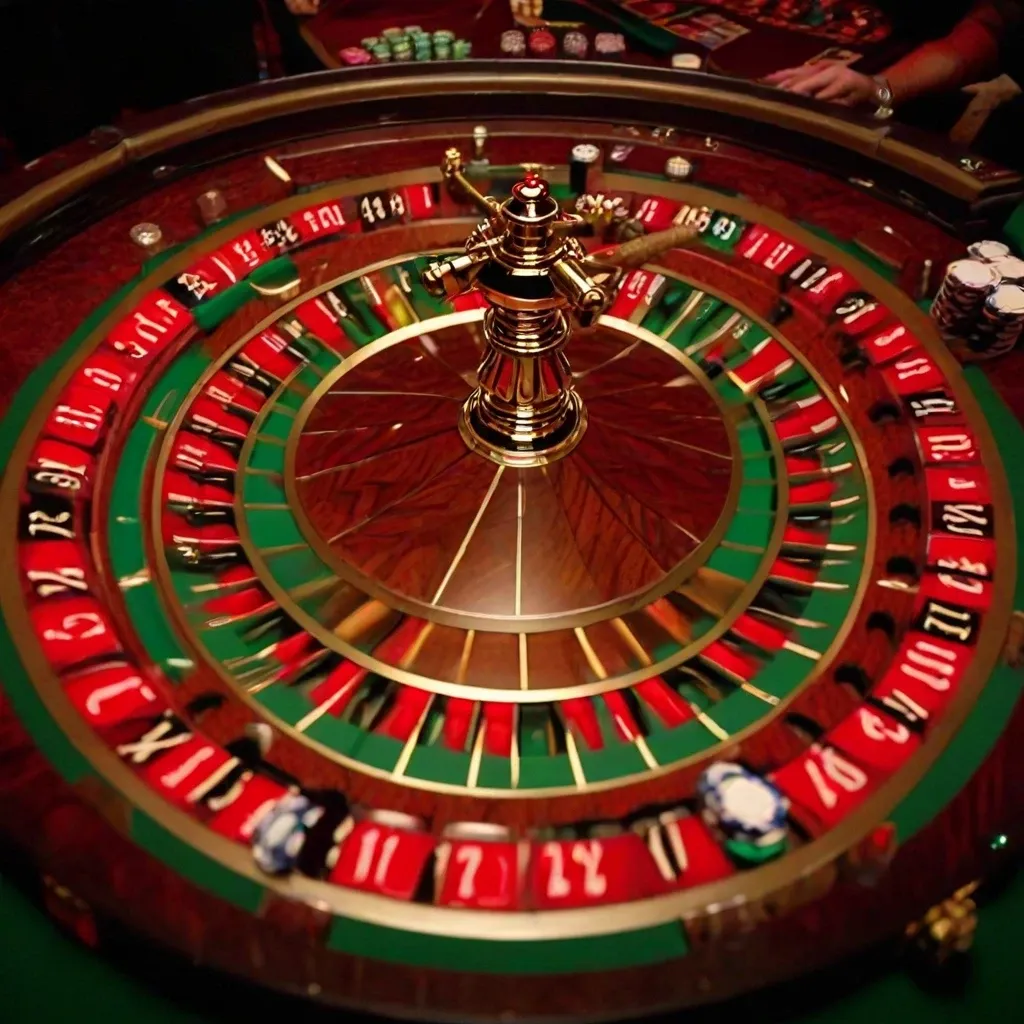
Roulette, a name synonymous with casinos and high-stakes excitement, boasts a captivating history as rich and complex as the game itself. Emerging from the melting pot of 17th-century French gambling, possibly influenced by earlier Italian and English games, roulette quickly transcended its origins to become a global symbol of chance and sophistication. The whirring of the wheel, the bouncing ball, and the collective gasp as fortunes are won or lost have captivated generations. It’s a game equally at home in the opulent casinos of Monaco and the digital realms of online gaming. Its glamorous image, often portrayed in film and literature, contributes significantly to its enduring allure. The simple premise – predict where the ball will land – belies the strategic depths and intense emotions that roulette ignites. The game’s very essence lies in its simplicity, making it accessible to novice gamblers, while the potential for complex betting strategies keeps seasoned players engaged. In casinos, the roulette table is often the center of attention due to the sounds and energy that the game produces. One can almost feel the anticipation in the air as the croupier spins the wheel, a small ivory ball dancing its way to someone’s destiny. It is a memory that sticks with anyone who has experienced it.
The Different Faces of Roulette
Roulette isn’t a monolithic entity; it exists in several variations, each with its own nuances. European roulette, often favored by seasoned players, features a single zero, affording a lower house edge. American roulette, distinguished by the addition of a double zero, slightly increases the house advantage, impacting the odds. French roulette, closely related to the European version, incorporates specific rules like “La Partage” and “En Prison,” which can further reduce potential losses. While the core gameplay remains consistent across these versions, the subtle differences in the wheel’s layout and the application of unique rules create distinct strategic landscapes. It all depends on preference, but considering the odds, European and French Roulette are the best options for any serious gambler looking to maximize their chances.
Poker: More Than Just Luck – Strategy and Social Dynamics
Poker often gets a bad rap as a game of pure chance, a gamble where fate decides your fortune. However, scratch beneath the surface, and you’ll discover a compelling blend of skill, psychological warfare, and strategic thinking. It’s a game where understanding probabilities collides with the art of deception, and where reading your opponents is just as crucial as the cards you hold.
The heart of poker lies in its strategic depth. Mastering the game involves understanding pot odds, calculating expected value, and knowing when to bet aggressively, call cautiously, or fold wisely. Bluffing, a cornerstone of poker, adds another layer of complexity. A well-timed bluff can rattle even the most seasoned player, forcing them to second-guess their decisions and potentially surrender a winning hand. The ability to read opponents, to decipher their tells – subtle behavioral cues that betray the strength (or weakness) of their hand – is an invaluable asset.
There’s Texas Hold’em, the most popular poker variant, where community cards create countless possibilities. Omaha Poker offers a different dynamic with four hole cards, leading to bigger pots and bolder bets. Each provides a unique challenge and calls for a specialized approach. While luck certainly plays a role in the short term, the players who consistently win are those who’ve honed their poker skills, mastered their emotions, and understand the intricate dance of strategy and psychology.
I can recall a friendly game of Texas Hold’em when a friend was betting big when the flop didn’t seem to favor his hand, I understood he was bluffing when I noticed a slight twitch in his left eye, a tell he was unable to hide.
Baccarat: Demystifying the Game of Choice for High Rollers
Baccarat. The name itself conjures images of James Bond in a tuxedo, high-stakes tables shimmering under chandelier light, and an air of sophisticated mystery. For many, it seems like an exclusive club, a game reserved for the elite. But peel back the layers of mystique, and you’ll find a surprisingly simple game, fueled by fast-paced action and the potential for significant wins – or losses, of course.
One of the biggest misconceptions about baccarat is its complexity. In reality, the baccarat rules are remarkably straightforward. Forget intricate strategies; the core gameplay revolves around betting on one of three outcomes: the Player, the Banker, or a Tie. Two hands are dealt, and the hand closest to a total of nine wins. Card values are simple: Aces are worth one, 2-9 are face value, and 10s and face cards are worth zero. If the total exceeds nine, only the last digit counts (e.g., a hand totaling 15 is worth 5).
There are some who believe that intricate baccarat strategy is essential, but this is not really the case. While experienced players may employ betting systems, the fundamental element is luck. The house edge varies slightly depending on the bet, with the Banker bet typically offering the lowest edge, which explains why it’s so popular. I remember one time while in Vegas, I saw a guy betting big money on the Player option, convinced he had some secret system. Let’s just say his confidence didn’t translate to winnings.
Baccarat’s association with high roller game is deeply ingrained in its baccarat history, particularly its European origins in the form of chemin de fer. This version, where players bet against each other rather than the house, amplified the drama and high-stakes nature of the game. Today, whether played in a lavish casino or online, baccarat retains its allure, drawing players in with its simplicity, speed, and the tantalizing possibility of a quick fortune. So, the next time you see a baccarat table, don’t be intimidated. Take a seat, place your bet, and let the cards decide your fate.
Classic Slots: The Allure of Simplicity and Nostalgia
Classic slots stand as a testament to the enduring appeal of simplicity in the ever-evolving world of casino games. These games, often featuring three reels and a limited number of paylines, evoke a sense of nostalgia for players who remember the early days of mechanical slot machines. The allure lies in their straightforward gameplay, which is easy to understand and doesn’t require complex strategies.
The history of slot machines is a fascinating journey, beginning with Charles Fey’s Liberty Bell in the late 19th century. This iconic machine, with its simple mechanics and recognizable symbols like bells, hearts, and spades, paved the way for the modern slot machine industry. Over time, slot machines evolved from mechanical devices to electromechanical marvels and, finally, to the sophisticated online slots we see today.
For many, playing classic slots is like taking a nostalgic trip back in time. The familiar symbols, the sound of the reels spinning, and the anticipation of a winning combination trigger fond memories of simpler times. This nostalgic connection is a powerful draw for players who appreciate the history and tradition of casino gaming. Even with the advent of elaborate video slots and immersive 3D games, classic slots continue to hold their own, offering a comforting and familiar experience that appeals to a wide range of players. The transition to online platforms has only amplified their accessibility, allowing a new generation to discover the charm of these vintage games.
The Future of Classic Casino Games
Classic casino games, steeped in tradition, are not relics of the past but are undergoing a fascinating transformation to thrive in the digital age. Innovation is the name of the game, ensuring these mainstays remain relevant and engaging for a new generation of players.
One exciting avenue is the integration of virtual reality (VR). Imagine stepping onto a virtual casino floor, interacting with other players, and experiencing the sights and sounds of a real-world casino from the comfort of your home. VR casino games are no longer a distant dream but a growing reality, offering immersive experiences that blur the lines between the physical and digital worlds. These experiences give any player a rush.
Another significant trend is the addition of skill-based elements to traditional games. Recognizing that modern gamers crave more than just luck, developers are incorporating strategic decision-making and skill-based challenges into games like blackjack and poker. This not only adds a layer of complexity but also appeals to players who enjoy a more active role in determining their fate. Players begin to feel more indulged into the game.
Social casino games are also reshaping the landscape. These platforms allow players to connect with friends, participate in tournaments, and share their experiences, creating a sense of community around classic casino games. This social aspect enhances engagement and makes the experience more enjoyable, especially for those who appreciate the social interaction of a physical casino.
The future of classic casino games is not about replacing the old with the new, but about blending tradition with innovation. By embracing technologies like VR, incorporating skill-based elements, and fostering social interaction, these games are poised to entertain and captivate players for years to come with this new era of gambling.
Conclusion
Classic casino games continue to captivate, and their enduring appeal stems from a potent mix of strategy, chance, and rich cultural history. These games offer more than just a gamble; they provide a mental challenge, a social experience, and a connection to a legacy that spans generations. The thrill of a well-calculated risk in poker, the suspense of the roulette wheel, or the strategic simplicity of blackjack – these are experiences that resonate deeply.
Their ability to evolve while retaining their fundamental essence ensures their ongoing relevance in a rapidly changing world. The classic casino games are not mere relics of the past but living, breathing entities that adapt and thrive. They represent a timeless pursuit of fortune and fun, promising excitement and engagement for years to come.